


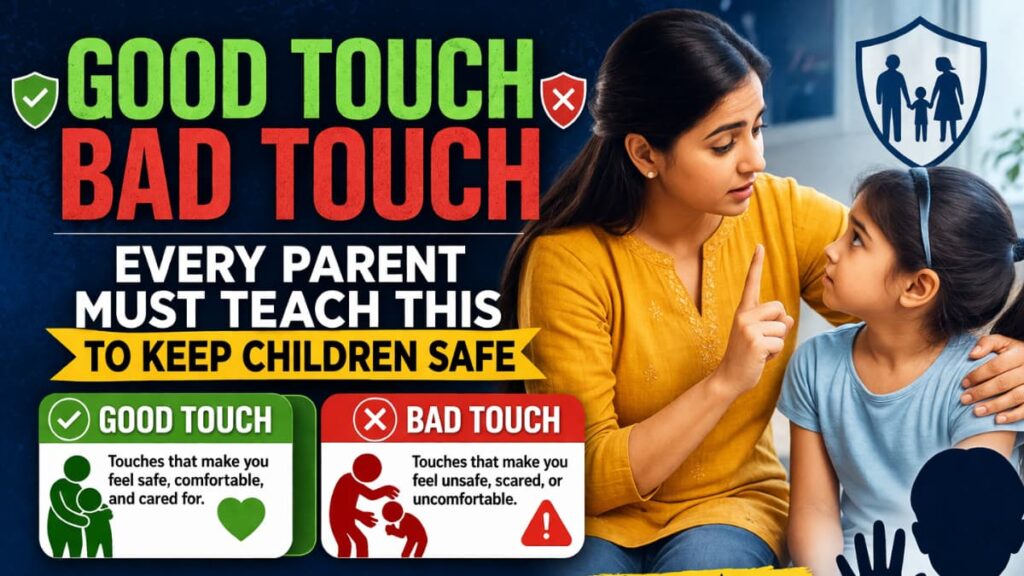
In today’s time, child safety has become one of the biggest concerns for parents. With increasing awareness about child protection, it is essential for parents to educate their children about personal safety from an early age.
Teaching children the difference between good touch and bad touch is not just important—it is necessary for their emotional, physical, and mental well-being. When taught correctly, it helps children become confident, alert, and capable of protecting themselves in uncomfortable situations.
Parents should always explain this topic in a simple, friendly, and age-appropriate way so that children understand it without fear or confusion.
What is Good Touch and Bad Touch?
Good Touch
Good touch is any kind of physical contact that makes a child feel safe, loved, and comfortable. It is usually associated with care, affection, and protection.
Examples of good touch include:
- Hugging by parents, which makes the child feel secure and loved
- A gentle touch or blessing from grandparents
- A doctor’s touch during a medical check-up, especially when parents are present
It is important to explain to children that good touch feels nice, safe, and does not make them uncomfortable.
Bad Touch
Bad touch is any physical contact that makes a child feel uncomfortable, scared, confused, or unsafe. Children may not always have the words to explain it, but they can feel that something is wrong.
Examples of bad touch include:
- Touching private parts (areas covered by a swimsuit)
- Forcing a child to hug or kiss someone
- Touching a child in a way they do not like or without their permission
Parents should clearly explain that if any touch makes them feel uneasy or uncomfortable, it is a bad touch—even if it is done by someone they know.
How to Teach Good Touch Bad Touch to Children
1. Teach the “Swimsuit Rule” in a Simple Way
One of the easiest ways to explain personal boundaries is through the swimsuit rule.
Tell your child:
- The parts of the body covered by a swimsuit are private
- No one should touch or see these parts
- They should not touch anyone else’s private parts either
Also explain exceptions carefully:
- Parents may help younger children with cleaning
- Doctors may check, but only in the presence of parents
This rule is simple and easy for children to remember.
2. Use Correct Names for Body Parts
Many parents avoid using proper terms for private parts, but this can create confusion.
Teach children correct names like:
- Penis
- Vagina
- Chest or breast
This helps children:
- Communicate clearly if something happens
- Understand the seriousness of the topic
- Avoid confusion or embarrassment
Using correct language empowers children to express themselves confidently.
3. Use Role Play to Make Learning Easy
Children learn better through activities and play.
You can:
- Act out situations where someone tries to touch them
- Show them how to react if they feel uncomfortable
- Practice saying “No” and moving away
For example:
- What to do if a stranger offers something
- How to respond if someone forces a hug
Role play makes learning practical and builds confidence.
4. Teach Them to Say “No” Without Fear
Children are often taught to respect elders, which may make them hesitate to refuse.
Teach them clearly:
- It is okay to say “No” if something feels wrong
- They do not have to accept unwanted hugs or kisses
- Their safety is more important than being polite
Encourage them to:
- Say “No” loudly
- Move away quickly
- Go to a safe place
This helps children react immediately in risky situations.
5. Help Them Identify Trusted Adults
Children should know whom they can turn to for help.
Teach them to trust:
- Parents
- Teachers
- Close family members
Tell them:
“If anything makes you uncomfortable, always tell us or a trusted adult.”
Also assure them:
- They will not be scolded
- They will be believed
- They will be protected
This builds trust and encourages children to speak openly.
6. Educate Them About Secrets
Children should understand that not all secrets are good.
Explain:
- Good secrets are temporary and make people happy (like surprises)
- Bad secrets make them feel scared, uncomfortable, or confused
Make it clear:
- If someone asks them to keep a secret about touching, it is wrong
- They should tell their parents immediately
This helps prevent manipulation or fear-based control.
7. Teach Body Ownership
One of the most important lessons is that their body belongs to them.
Explain:
- No one has the right to touch them without permission
- They can refuse any touch they do not like
- Even known people must respect their boundaries
This builds self-confidence and helps children understand their rights.
8. Keep Communication Open and Regular
This topic should not be discussed just once. Regular communication is very important.
Parents should:
- Talk openly and calmly
- Ask simple questions about their day
- Encourage children to share feelings
For example:
- “Did anything make you uncomfortable today?”
- “You can tell me anything without डर”
When children feel safe, they are more likely to speak up.
Why This Awareness is Important
Teaching good touch and bad touch at the right age helps children:
- Stay alert and aware of their surroundings
- Build confidence to speak up
- Protect themselves from unsafe situations
- Understand their personal boundaries
Most importantly, it creates a strong bond of trust between parents and children.
Final Thought
Teaching children about good touch and bad touch is not about scaring them—it is about empowering them. When children are aware, confident, and supported, they are much safer in any situation.
Stay Updated With DigiHindNews
For more parenting tips and important awareness updates, visit DigiHindNews.com regularly, bookmark the website for instant alerts, and share this article to help other parents. Stay informed, stay ahead with DigiHindNews.com.
Add Digi Hind News as preferred source on Google for reliable and timely updates